Friday, August 1, 2014
New Location for posting
I've moved all these posts to www.ptjackson.com for an updated look and feel


Saturday, December 8, 2012
The marginal value of technology
William Preece, in 1878: "The Americans have need of the telephone, but we do not. We have plenty of messenger boys."

It's really hard to predict the impact of a new technology on a society. Many things that were meant to change the world (the segway) didn't and so many things people had no idea they "needed" all the sudden prove to be invaluable. When I was a young IT guy I was asked if this new email system was a "toy", and why would I type a message instead of walk down the hall or call. And Yet that's exactly what we do now, we send electronic messages many times to people we are in clear view of. But why? I propose it's the marginal benefits of technology that we just overlook.
Marginal benefits are so hard to see or quantify. Take for instance the automobile, at first we might say, what major advances have been made in the automobile in the past 50 years? They still get us from work to our kids soccer game so why hasn't something better come along? Well the Model T was about $22,000 in today's dollars, about the same cost of a new sedan today. For that though we get more comforts, like AC, safer cars and cars that go faster. Most importantly cars last longer than they ever have. They are more reliable than ever. The average car on the road is now over 10 years old. This means we can get to work without spending money on repairs, it means we can get places reliably and quickly. Long lasting cars also means that there is a used car market whereby you might be the 3rd or 4th owner of a car. This pushes the price of used cars into the affordable area for all members of society. More cars, more people who can contribute to society, more people to buy goods and services, and visit friends and family. The automobile has advanced and has helped to contribute to our GDP, through small advances over and over.
The same can be said of other technology specifically what happens on the internet. Could I mail something instead of email it? Of course but it wouldn't get there as cheaply or quickly or more importantly without much effort. Could I go to the store and buy a new book instead of download it? Again yes but I'd probably buy fewer books, and thus read fewer books and be less informed. How about buying a new car? I mean I still have to go buy those right. Only now with the internet to I have almost "perfect information" I can know what I should pay, what the reliability of the model is and without leaving my chair know if there are any for sale within 200 miles of me. This saves me time, money and makes me happier about my purchase. I can now take those savings and invest or spend in different ways. Almost every purchase can be enhanced by having access to the internet. Sometimes its ease, sometimes price, and sometimes it's just making a smarter decision. All of this happens millions upon millions of times every single day all across the world. The marginal benefits are hard to see but they multiply and compound over time creating more productivity.
Even the oft maligned social media channels have marginal benefits. It's easy to point to stories that show marriages being destroyed or jobs being lost as a result of social media. The part that's hard to see is those friendships which begin online and later become "real life relationships". It's hard to see that millions of times a day people feel more connected to friends, family and co workers. It's hard to see that almost 20% of job seekers found their job because of Facebook. It's hard to see that you can maintain more connections than have ever been humanly possible. All marginal benefits, little bits of benefit that multiply compound and add up over time, creating a sense of more connectedness and shared experiences.
The title of this Blog is Lean, Nudge, Push, Change, Transform, primarily because I think the best changes are almost imperceptible. They take place as little changes, one a time piled on top of one another. I believe that our world is getting better, day by day through advances in technology of all kinds. Any advance in communication will undoubtedly make lives better for us, mobile, social, photos, news. The world is getting better and it's exciting that it is happening at such a breakneck pace, even if it happens in an invisible marginal way.
Monday, August 20, 2012
Disrupting education- Beyond the facts of Education
This week I moved my oldest daughter into the dorms as she started her college journey. When this happens to you, you'll find yourself doing a lot of reflection. One of the questions that get asked a lot is college expense worth it, is it still the right way to educate people today. Additionally, there's no lack of startups trying to disrupt the education space these days. CodeAcademy, khanacademy, iTunes and all the open courseware projects are some of the more popular ones. When I was taking part in the founder institute it seemed as though fully one third of the people there had ideas that revolved around education. There's nothing more important to a society, country, worlds future than the education of the people. Democratizing the information is ONE step in helping provide an education but the more I think about it I'm not sure it's the most important one.
The following is a list is a think "traditional" based post secondary education does better. These are problems that need to be solved by those who want to change education.
1. Having the information available doesn't mean it's going to be learned or even consumed.
I think this is the biggest misnomer about education available on the internet. Libraries have always provided people a way to educate themselves. No, That's not video, and it's not interactive and there's lots of things libraries aren't but the information is there to be consumed. Having the information out there just means I can learn that skill, task, subject TOMORROW because there's always tomorrow. However, what's missing is the public commitment, hard deadlines and social aspects of going to school help to provide social pressure to finish what you start. Not everyone will finish but there's a very public aspect to enrolling and telling people that you can't go out to dinner because you have class in the morning. There are people to be accountable to, classmates, teachers, family and friends and your bank account. You've made a public declaration and dropping out means admitting that to people. Dan Ariely has done a significant amount of work in this area , what he found it is students perform much better when they have NO say about what deadlines there are, perform a little better when there are self imposed intermediate deadlines and worst of all when there's no deadlines.
There's a lot that paying tuition, being required to show up every day and having your course of study planned out for that's unaccounted for today in the "you can learn everything free" startup culture. This can't be overlooked, or understated. Think about how many times you've liked to learn how to do something but haven't even taken the very next step. Now imagine you did take the next step and find the online class that would teach you that but there's no fee, no one knows and there's no deadlines? There's better chance than not it never gets completed. There are many instances where people have successfully taught themselves things but this tends to be for those highly motivated, highly passionate people, not those in the fat part of the bell curve.
2. There's more to being successful than book knowledge.
One of the advantages is all the "intangible" aspects. There's the learning how to deal with different people from all different walks of life, ages, belief structures and locations. There's is the being exposed to all different subjects, topics and teachers. It's about transitioning out of your parents house and into adulthood within the "safe" boundaries of an institution. Are there other ways to do this? Without a doubt, however it's a benefit of post secondary education regardless. It's about learning who you are, what the world is like and developing your own style to deal with all of the above.
3. Sometimes we need individual attention .
If "the information is out there" why don't we just sit preschool kids down with a television and let them learn from that, then move them to a tablet and internet connection. Why? Right now current environments provide ways to measure and identify students who need help or need things explained in a new way(although not as well as they should). There are still occasions when you have questions or don't know you SHOULD have questions. Individualized training is still needed. Teachers are there to answer those questions or to provide help when they see students struggling. In a post secondary environment usually that help is greatly diminished inside the classroom but is still available elsewhere within the institution, during office hours, peer groups or tutoring labs. Many people give up in the process when they were really close to the answer. Individualized training isn't well accounted for today on the internet. It works great if you understand right off the bat, it doesn't work well if you don't and have few other resources. I'll restate from an earlier paragraph, the people in the top quartile of the Bell Curve in a given subject don't need this help, but I'm talking about everyone else.
4. Facts change-
I heard it 10 times during orientation last week, facts change, what we teach you will change. I think a topic based learning isn't really preparing people for jobs that require problem solving which are increasing in our workforce. Teaching students to problem solve, work together, dig for information and assemble facts to arrive at a conclusion is something that we have to make sure we are doing. It's fairly common to hear people say "the stuff I learned in college don't apply to my job". There's still value in the process though, hopefully through the institution they learned how to learn, learned how to problem solve, and learned about all the things outside of facts that will help make them successful. Yes I can go on the web and learn how to solve for X but I need to be able to apply that.
The above isn't in defense of the status quo, in fact quite the opposite. If people don't have to spend $50,000 to receive an education we'd be better off. There are those that can't, won't or don't and for those cost is probably a contributing factor. I say that the above are problems that need solving. I think that there are great opportunities now with technology to provide a wealth of choices there were never available before, also in the right setup you can have hyper individualized training because we are no longer bound by location. In fact I think that the only way to "fix" education is to completely re create what it means Most importantly how to create social pressure for people to both start and finish an education, then help them through the process along the way. No we shouldn't just keep doing things the way they've always been done, and create a barrier to success. We need to think beyond just the facts based part of learning.
Sunday, April 29, 2012
Productivity and Software

I can not think of an example in the history of the world we could have such a small number of people provide goods or services to millions of people. Software scales like nothing else the world has seen. A good developer can write code that can serve 10 users or 10 million. What's more is that through cheap distribution, on app stores, social media, and the web companies can be built with little capital, or at least very capital efficient. All this comes together so that "software begins to eat the world". Who today would like to invest in a CD or DVD printing business, or a company that does the printing of books or magazines, what about a travel agency, and the list goes on. Even brick and mortar retailers are downsizing their footprint as shopping moves online. Every day little by little software is replacing labor or physical goods in our economy.
Productivity has increased more than 4X since 1950. That means that a worker today would just need to work 10 hours today to produce the same level of output of 1950. I expect that pace will accelerate as more things that were once done in the physical world transition to online, shopping, banking, and even socializing. What's interesting to me as that it's probably imperceptible to most people. Every day we are able to get more done with less and we don't really see it. Most of the productivity gains can be attributed to technology and the software that runs it. This is why it's important to have the best developers you can get, a good one can easily to the work of 5 average ones, and because the work scales there's lots to be said about getting the right people.
Increased Productivity is the key to our success as a country and as humankind and our economic standards of living. It can "solve" many of our financial issues and provide a better quality of life day to day. I'm hoping soon that things like software that drives our cars will come into existence freeing up hundreds of thousands of hours a day for people to work while commuting (assuming they need to commute in the first place). So while software may be eating the world, it will be to our benefit.
Tuesday, February 28, 2012
In defense of tracking cookies
Recently there has been much concern about letting advertisers track you across websites to provide relevant ads. Let me start by stating in NO WAY is it okay for google to bypass the user's setting in the browser to display ads. Now that's out of the way my question is what's wrong with tracking cookies? Especially if they are anonymous but even if they aren't . Why wouldn't you want the most relevant ads displayed to you?
If I am planning on making a trip to Las Vegas, some relevant ads might be appreciated. If I'm looking for a new refrigerator then coupons or offers related to refrigerators are something that I would like to see. I'm in no way interested in diapers or strollers (our kids are grown) nor as a male would I be interested in cosmetics. Those ads are pointless and annoying to me. Yet an ad for the latest documentary movie I'm probably going to watch. If you happen to be a fan of apple products you'd probably like to see apple ads.
This is not only important for me it's important for the advertisers. Ads and marketing are built in to the cost of the goods and services I use. If those advertisers become more efficient with their ads then those savings ultimately passed on to me through lower prices or better products. It's great for the advertisers since they aren't wasting money. It starts to put an end to the saying that "Half the money you spend on marketing is wasted you just don't know which half".
For decades we have received either no charge or discounted services because of advertising. Google provides many things I use every day for no charge, search, gmail, chrome browser. Every social network relies on advertising, and just about every service people use on the internet. Even before that we received "free" television, "free" radio, and discounted newspapers. Even sporting events and and concerts are subsidized by advertisers. In these traditional media sources advertisers had to spend money on people they KNEW weren't interested in their product just to reach those that were. Now with tracking cookies I can spend that money on those people who are likely to be customers. Better for the advertiser, better for the customer, better for the site. The internet will even to accelerate taking dollars from traditional media the more targeted the ads can be. More advertising pouring into sites means more services can be there and be there for no charge.
There is little reason that people should be concerned about this, quit being scared about the concept that some guy is looking at your site history and wants to come to your house to sell you something. Tracking you across sites improves the internet.
Thursday, December 8, 2011
I finally cracked it

So what could apple do that would be a game changing? My prediction is that they will partner with a one or two cable providers, let you connect your apple TV directly to the coax and eliminate the cable box, cable remote, DVR, DVD, and every other setup top box. Other than power and cable it would not have ANY OTHER INPUTS. Want to play games, use your ipad. What about your DVD/Blue Ray player? Itunes.
Here's why I think this will happen.
1. Apple doesn't have enough content to make a device without inputs so they'll need content from somewhere, most people aren't ready to completely give up cable. I can't see an apple TV that has the same legacy connections today, since that's one of people's largest frustations.
2. By partnering with 1-2 providers they can get the out of the box experience very "appley". Plug it in, turn it on sign onto itunes and your done.
3. Limited rollout (think iphone) will create scarcity and thus people will want what they can't have. Providers will fight to get the appletv, consumers will be asking their providers.
4. Cable, internet, IPTV, music, games, will all be delivered seamlessly, you won't know/care if it the content is being delivered from the cable, internet, locally recorded, or via apps.
5. Cable companies get to maintain the "status quo" of getting you to pay $100 and maybe more with easy subscriptions. They can deliver content in the traditional multicast way or IPTV without you having to know or care, maximizing the value of their network. Since this TV will only work on their system, you'll be locked in (again think cell phones). Possibly they could even subside the sale of the device with long contracts.
6. It will create a differentiation for those providers who have it. My guess is since AT&T did the iphone they'd do this deal, especially since they aren't the incumbent cable provider in most areas. DirecTV is national but seems many apple fans wouldn't/couldn't put up a dish, therefore might not be the best first choice.
One device, one remote (your iOS device), no inputs, all Apple.
Wednesday, November 16, 2011
Early adopters left behind
Becoming the uber expert is fun. Everyone at one time has been so good at something that it seems they can answer any question related to it. Over time though newer ways to do the same thing emerge, and the expert contends that they suck. The old system is better, they say. They move to discredit these improved methods claiming it's lacking in function, form or price.

As a new technology begins to emerge early adopters begin to gravitate to the latest "thing". Home brew, hobbyists, and fans tinker around. In fact almost all things that we now use as consumers were first part of the hacker culture. As more and more people use the technology the methods to make things happen need to be lowered to make room for those who are less technical. Usually for these advances raise all boats, meaning most everyone can benefit from the addition of tools that make it easier for the fat part of the bell curve to understand and adopt the technology. Some of the best examples of this is transition from text based computers to graphical ones, special query languages (think google and their operators) to an easier to use interface, physical keyboards to a virtual one, typesetting vs word processing and printing, content management systems vs html files only, farming vs going to the store, turning the crank on the car vs turning the key, oral tradition vs written words.
Initially, early adopters shun this new way. It's usually not better at first, but more importantly it's part of their identity. They have become the go to guy/gal for how to make the complicated system work. The early adopters become great at their craft, they become experts. They have A LOT invested in learning all commands, systems, and specialized operators. Only a select few, or chosen ones, can do the things they do. While everyone else was ignoring the future they were investing in it. In a way this stands to threaten their status as a gifted wizard of the technology. They want to hold on to their way of doing things and their status, it's a defense mechanism.
The early adopters say that the new system at usually lacks all the things that made the old system great, and to a point they are right. The keyboard is better than speech recognition but slowly things are added that make it better and better. Little by little bit by bit the new way begins to catch up with the old way, maybe even begin to pass it. Now not everyone needs an expert to be proficient on this new technology, they can get by without an expert. The once uber expert might even be looked at as old school or out dated in their approach.
At this point the expert can do one of a few things, they can continue on in their old ways because there will always be someone who still needs an expert who remembers how to do it the old way. They can reinvest and take what they know and adapt it to the new system becoming really valuable with a good historical grasp of things, or just learn something completely new. The point here is that almost without exception despite how much they hate the change, society is better off. The world is better off we all still don't have to grow our own food, can create their own website, and find things on the internet. Progress has happened thanks to the efforts of the "geeks" but sometimes the geeks get left behind.
Sunday, October 16, 2011
I miss Andriod and can't leave iOS- Tales of a flip flopper

The tl;dr version is best summed up from this comic
Now here are my thoughts.
Touch - iOS feels just like liquid under your fingers. I can't describe it but both the accuracy of the touch and scrolling is just better for me. Winner: iOS
Widgets- I loved this about Android, there were widgets for everything but most importantly I used a widget called Pure Calendar that would show me an agenda view in 3 lines for upcoming days. iOS 5 does a little better with notifications than it used to but nothing beats a widget for this. Winner: android
Notifications: The new iOS notifications are almost exactly stolen from android however they have improved upon them. Now I can see things like sender, subject, and what the notification is about. Android had something called "ongoing" notifications for things like music that was running currently that I liked but the amount of info available in iOS notifications is just better now. Another thing that android accels is infinite configuring of notifications, make the light blink, vibrate, don't notify all app configurable infinite ways it seems. Winner: iOS
Camera: It's impossible to know how every camera performs but the 4s 8megapixel takes much better pics than my EVO and the gallery is much faster and easier to navigate than the EVO andriod Winner: iOS
Google integration: This might seem like a loaded, item but if you depend on google services like gmail, google voice and google suggest, it's just better on android as you'd expect Winner: Android
Physical aspects: Android comes in about every size you can imagine. Big screens are a plus for me. It's the hardest thing about going back to an iPhone for me. I miss a 4.3" screen. You can have a physical keyboard if you want. Some of the phones are heavier and some are lighter than the iphone. All that said there's something that just feels "right" about the iphone. It's got a great build quality, the glass and metal make it very nice to hold in your hand. TIE
Apps: The apple app store is just better, there's better apps and the apps have more polish. I don't know if android is just more difficult because it's so flexible, the amazon app store is better than the native android marketplace, but without question, the experience, the apps and all things third party are better in apple's app store. The only plus to andriod is I can install whatever I want where apple has a tight control on their apps so you as a user can only install what apple has approved. Winner: iOS
Multitasking: Android by a landslide. iOS has some fast app switching things but with android I can leave one task to run or download, switch to another and know it's going to finish. Switching is better on Android too, just hold down the home button and your last 8 apps show up to switch too. Winner android
Battery: Unknown but with Android it varied A LOT day to day, and varies a lot person to person, device to device. I'll know more in a few days but Android probably gets a nod here to having a replaceable battery in most units. My experience with the EVO was really bad though in the until the last format. Edge: android
Sceenshots: I have no idea why google hasn't added this and it frustrated me at least once I week that I couldn't do it without rooting the phone. Winner iOS
Reliability: FOR ME, iOS is just better, I hardly ever have to reboot. There were times I was rebooting at least once a day on android. I formated my phone 3 times in the 15 months I had it due to lockups, battery issues, etc. The one thing (first world problem) that drove me crazy was bluetooth. I have bluetooth in my car and if I was connected to wifi and left my garage the bluetooth would disconnect. I also couldn't use my address book in my car, it was a small thing but was a big pain almost every day. Apple has a small number of devices and controls what can run and when on the device so it makes sense it would provide a little more reliability: Winner iOS
Storage: Well the great thing about android phone is that most of the time you can buy a cheap SD card to expand your storage vs paying outrageous prices for apple's memory. The downside is you have to manage what's installed on your SD card. Apps can be installed on your SD card but many times I got a low disk space warning because I only had 512mb on the phone and many apps have to run in phone storage. So managing the disk space was annoying. With iOS I don't have to manage it. I have 16GB to use anyway I want. TIE
Downloads: Better on andriod in every way. I never had to worry if I was connected to wifi to do something like with iOS. Download whole system updates over 3G, podcasts, audio books, ANYTHING. I hate getting the message in iOS this is too big for cell data. Winner: android
Sharing: iOS touted with version 5 they had deep twitter integration. That doesn't even compare to android's share button. With android any app could tapp into the share function, email, evernote, facebook, twitter, g+ and every obscure social site you can think of. All sharable from almost anywhere. Winner Android
Cloud: iOS brought us iCloud. It can store backups of my phone, apps, calendar, documents, photos and just about anything. After formatting my Android phone 3 times, I can't tell you how frustrating it was to have to reload most everything and the marketplace only seemed to keep track of my purchased apps not my free ones. It just wasn't seemless and you'd think that it would be. However google based things worked pretty well, contacts, calendar, email. Also the auto upload of pictures to G+ was a great cloud feature Winner: iOS
Voice: Android has had voice actions for a long time. Given I have a long commute I would use it a lot. I was amazed how good it was the first time I used it. You could give it simple commands like "send text to" "search for" and of course speech to text. Siri is just better though. I can ask it questions and it will talk back to me. Add to that iOS's new location based reminders and it's a pretty powerful combo. I think it still has a ways to go since I have to think about what I can ask it but, the fact it reads things back to me and has more action items than google voice puts it in the lead for me Winner: iOS
It looks like the score on these things is 8 vs 6 which is why I have such a hard time picking a platform. My wife might take this phone from me in March and give me a chance to reconsider platforms as google releases their answers to iOS 5 and the 4s.
Tuesday, October 11, 2011
Feed the Borg, start talking to your phone

Enter goog-411. Goog-411 was a free service launched in 2007 to offer a free directory look-up service from your phone, eliminating the need for a costly information call to get a number. Why did google do this? To gather voice samples. Data was the key, not only processing power. This was the holy grail of speech recognition. By gathering samples of people's voice and then having the user select the correct listing Google gathered endless data points. Google used that data then to launch their own voice products including andriod actions and promptly discontinued goog-411 3 years later.
Talking into your smartphone via these apps has yielded a real leap in the ability for my computer to finally understand me. Now we have Siri, apple's new personal assistant. Siri not only promises to understand what I say but also translate that into actions. It seems almost too good to be true. What's the weather today? How do I get home? What are the markets doing today? Not only that but Siri will translate your words into emails and text messages.
With every word spoken into your android or iPhone you give the system one more data point to understand you better the next time. Over and Over, all around the world by using data points people are making these systems better. The cloud + mobile phones have brought in a few years what couldn't be done in the previous decades. Acceleration will happen exponentially with millions of people with accents, lisps, and different pronunciations will feed the system making it better for each of us.
My question will be how much will I need to think about what I can ask these systems? When will I be able to say "Siri what's my daughter's grades?" "How much money is in my account less what bills I have left to pay this month?", "What were our sales this month?" Being able to send a text message or get the weather is great. However, I'm looking for the friction to reach zero. In order for voice recognition to become mainstream it's got to be able to answer almost anything I can ask it, having to consider what I can and can't say to my phone probably means other than if I'm driving I won't use it. IF however I can ask it anything, and the barrier is low enough then voice systems can really make my life easier and help me get things done. I real personal assistant. I'm sure that our phones will teach us to speak to it just as it learns what we are saying. My hope is that by feeding these systems more data and adding API's soon I'll be able to not even worry if my phone understands me.
Friday, August 26, 2011
I can't use all this free software

I'm working on a startup (servicevines.com) and recently the WSJ article by mark Andreessen and a post by Arrington reminded me how I've overlooked just how far things have progressed since the start of the internet becoming the biggest disruption in my lifetime. Creative destruction is easier and cheaper than ever. If I were trying to start a company in the first internet age I would have went about it buy going and buying the following software and hardware, this assumes I could find the money from someone to let me try.
- Development tools, I could have spent tens of thousands of dollars on what I can have for free now.
- Web Server software
- Web Server Hardware
- Bandwidth
- Analytic tools like webtrends
- email server and software
- Database Software
- Database Hardware
Today I use the following free solutions to accomplish the same thing.
- Cake PHP
- Wordpress
- Free PHPFOG instance (upgraded to small instance)
- Google Analytics
- Google Apps
- MYSQL
- Sendgrid
- MailChip free (for marketing)
- Youtube
- all kinds of free and open source add-in's, tools, and community driven projects
There is more free software and services for startup out there than you could possibly use. All this means you can find out if an idea you have is worth pursuing with just a little bit of time and effort. In the old days it might cost upwards of $10,000 just to try your idea. Today the barrier to starting a company is ZERO dollars. $10,000 that most people don't have to ZERO is how far we have come. Couple this with thousands of limited trial services, or low priced starter services, free distribution of apps via various appstores and some free ads on sites like google and facebook and if you're going to start now is the time. It's amazing just in a 15 years how far we've come.
I just wonder what free services are out there I need to know about?
Thursday, July 14, 2011
Want to face hangout?

I'm as excited as anyone about the idea but not sure how it's going to happen. One way to make video calling for support calls. This could be a real boon to any company who has to troubleshoot things or needs to see things first hand. All support telephone services should have some kind of video chat. This does a couple of things, you can show the person your problem, and both sides can see they are dealing with a "real" human. Have a plumbing problem show the plumber, show your insurance adjuster your car, use your phone to show tech support what's on your screen, use it to show your doctor the bump on your leg. Many times people just need to see what you are talking about but are separated by distance. Why else aren't people adopting video? It's not because they don't want to see each other, you still walk to people's office, have onsite meetings, and meet for lunch.
Wednesday, April 13, 2011
How the car will again revolutionize the world

Why am a so excited about this prospect?
1. Decoupling of the "you are what you drive" idea- For some unknown reason people believe their car is an extension of who they are as a person. "I'm a austin martin" or "I'm a ford pinto". I am very confident that once you move from a driver of the vehicle to a passenger this oneness with the car will diminish if not disappear altogether and once this happens we can begin to just get in the next car that's going our way. If a car is just a way to get from A to B then as long as what I'm riding in is safe, comfortable and clean it doesn't really matter and I'm just trying to get somewhere.
2. Cars sit idle most of the day- 85% of the time your car isn't being used. This is just a plain waste of resources, the world could use a lot fewer cars IF they were used more efficiently, then the resources used to build and maintain those cars could move elsewhere in our society. Maybe most importantly we would need much less parking and parking lots to keep those cars.
3. Usher in the use of electric cars. Electricity is cleaner and more efficient than gas burning cars. Given it doesn't matter what car I get in cars can be sent to a charging station when the need charged and a fully charged replaces it on the street to pick up the next passenger
4. Productivity increase- Americans spend more than 100 hours every year in their car . That's more than two weeks of work. There's a lot of lost productivity that could happen now with ipads, smartphones and laptops while people were commuting. Once there is a realization by business of how much can be done without being in the office there will be less people going into the office, and will just work from home part of the time
5. Goods getting to market faster- Without the restriction of how much time can be spend driving computers will just drive goods to their destination without stops. Again this will allow the more than 3,000,000 drivers move to more productive activities for our world.
6. Getting Goods to MY HOUSE- How many of my trips in a car are to "run to get something"? there's a lot and once the car can pick up some milk and bring it home is there really a reason for me to be inside the thing?
7. Safety. There are more than 30,000 people in the US alone killed in accidents. That's not to mention those hurt or incapacitated for life. Self driving cars won't reduce that to zero but even if it cuts it in half that's great. Notice I didn't mention safety first. It's very important but there's so much more promise of a autonomous transportation device.
8. Finally the Flying Car-- Okay I know, I know this is the thing of science fiction but I do hold out some hope here. My thought is that once we are comfortable with computers driving us around we'll save more on infrastructure costs and make all this other happen faster by just having flying cars. But maybe that just makes me like this onion anchor.
Sunday, March 20, 2011
Layer upon Layer
One of the things that stuck with me from the book I read several months ago "What Technology Wants" is how written word has contributed to science. Kelly makes what seems like an obvious point now that without written text we would constantly have to rediscover things. However, now we can write down the formula or the methodology or the theorem or proof and it becomes part of the science that following generations can build upon as "fact". This means the very next thing that is built is just a culmination of all the work that has happend prior.
The same is true of the tools and "technology" of today. The iphone has become one of the best things for technology because it's made it simple enough that even a toddler can use it. The person who designs the hardware or even the interface doesn't have to know anything about code or processors or any of the lower level technology. It's been built by prior programers and while always being enhanced by each contributor, those programers allow us to have postions like designers, and User Interface people.
In this way each advance in the tools allows the next people who come along to build something, faster, easier or better looking. Only in recent years have we seen the rise of the importance of the designer. That's because before when we were just laying out text on a screen, and data input via keyboard there wasn't that many choices to make. Technology begets more technology and more jobs for people to focus on different areas of the technology. There was a time when everyone in computers were a programers, but then we needed more hardware people, network people, database people, help desk, trainers, project managers, designers. Evolution of the tech, involves evolution of the tools and ultimately the people who use those tools.
Sunday, February 27, 2011
Great Launchpad Experience

Founder Institue is run by the great Adeo Ressi. I can't say enough good things about Adeo, he's very tough and has been described as "harsh" and that's because he's interested in helping those who are serious build enduring companies. If you are serious he's your biggest fan and supporter, but if you just thought you might kind of like to start something then it's probably not for you and through the program you'll find that out quickly. If you just needed a little (or a lot) pressure, accountability, and kick in the pants to start building your dream company then FI is for you, roll up your sleeves and apply.
There's no doubt this program will prevent you and your company from making very rookie mistakes. Through a combination of great mentors from companies like Mint, Evernote, TechCrunch, Eyefi, BitTorrent, Like, and many more they teach you each week how to build your company and share lessons learned. You have work to complete each week that's not designed to be just "homework" but make you take steps to build your company. At the end you have a clear vision, and the basics of getting your company off the ground, and the hard work starts.
Founder Institute is a life changing experience if you've been waiting to start a company, run to enroll in a semester now and get busy, there's no better time than now to start. Again, I can't say enough good things about Adeo for some reason I think there's 30 hours in his day for all the things he gets done.
My fellow graduates from Houston.
www.locotext.com
www.eggnest.com
www.cloudwire.tv
www.caringwings.com
www.servicevines.com (me)
Friday, December 17, 2010
Incremental progress is very marginal
I recently read a book from a guy who I have a lot of respect for. Kevin Kelly has a great blog and his book "what technology wants" is fantastic.
 This is the plight of technology, all technology has some good points and and some bad points. Many people will tell you your idea is bad or that technology is the demise of our culture. However, all imaginable technology is neither 100% good or 100% bad. Technology and ideas are some combination of both good and bad. So the question that really must be ask is, does this technology's good points outweigh the bad. As long as the idea is 49% bad and 51% good then we are making progress. That means we are helping society. Today cars kill 40,000 people a year. What if we built "robot" cars that drove themselves and took people places but accidentally killed 20,000 people would be clamoring to say that we needed to remove the robot cars despite less people were being killed. Progress comes in incremental levels 1% at a time.
In this book he tells the story of a missionary who is working in china. In the village that he works with all the people gather crops manually without the use of any tools. Of course the missionary saw how inefficient this was and wanted to help so he ordered a Sickle from his home country and had it sent. Of course the villagers at first thought the technology was great. The sickle was going to save them so much time and labor. But that evening the villagers had a meeting among themselves. The next morning the chief told the missionary the sickle must be destroyed. Why the missionary asked? The Chief explained that the tribe was concerned that a thief would get a hold of the tool and be able to steal all of their crops in a single night.
 This is the plight of technology, all technology has some good points and and some bad points. Many people will tell you your idea is bad or that technology is the demise of our culture. However, all imaginable technology is neither 100% good or 100% bad. Technology and ideas are some combination of both good and bad. So the question that really must be ask is, does this technology's good points outweigh the bad. As long as the idea is 49% bad and 51% good then we are making progress. That means we are helping society. Today cars kill 40,000 people a year. What if we built "robot" cars that drove themselves and took people places but accidentally killed 20,000 people would be clamoring to say that we needed to remove the robot cars despite less people were being killed. Progress comes in incremental levels 1% at a time.
Thursday, December 2, 2010
Only the best survive- Founder Institute Houston

It's also not for people with thin skin in the third session not one person who pitched their idea was told "hey that sounded great let's tweak it just a little". No you were pushed hard on the how and why of your idea? Is the market big enough? What problem are you solving and one of the main questions is always "What are you building again?" While that seems easy I think founders are "cursed with knowledge" to borrow a line from Chip and Dan Heath's Made to stick . They've thought about their idea so long it seems to them like everyone should just naturally understand it, guess what THEY DON'T. You better get to the point you can explain it in one sentence in a way your mom knows what you're talking about. Simple, Simple, Simple
Founder Institute is really a challenge and I find it stretching my abilities in a good way. It's rough traveling from Oklahoma once a week but as they say what doesn't kill you. Here are some of my takeaway's from the 3rd session.
- You aren't going to be the first person with this idea and if you are it probably sucks or is too early. This goes right in line with what I remember reading from Steve Blank's blog a few weeks ago, which talks about the first to market fallacy.
- While you need to be lean and flexible (see lean startup) but you can also rule out a lot of ideas with research. and lots of it. You need to know how big your market is? Who are your competitors (yes there are some) and what kind of market are you in (again you think this part is easy but it's not)
- You can find a lot of this using competitor's blogs, press releases, twitter, delicious, etc, there's a good chance they've done a lot of the research for you
- Figure out how to get to $100 million in revenue in 5 years if you expect to build an enduring company.
- Know your value proposition as Dave McClure says "Your solution is not my problem" if it isn't a pain point for people you are going to have a tough time convincing people to use it.
In summary, Be flexible with a very simple idea with a great value prop, in a big market (greater than 1Billion) by doing a lot of research and interviews.
Friday, November 19, 2010
The Beginning
In mid October I found out I was accepted to the Founder Institute. While honored to be accepted after taking the test and completed the application, I figured Houston was just too far to commute for 14+ weeks. After thinking about it further and realizing that my friends where tired of hearing the ten thousand start up ideas I had I decided to see if I had what it took to create and manage my dream company. I told my employer about my intentions to make the weekly commute to Houston and to my surprise they were so supportive of what I was doing they offered to become early "investors" by paying for me to fly down each week. I can't say enough times the group of guys I work with you'd never find anywhere else.
Enough with how I arrived and more about the program itself. Entrance into the program is based on an application and a couple of tests that test your ability to learn, and adapt. The institute is a top notch program, I did my research. Adeo, the founder has created over 2 Billion and value in companies he has either started or been involved in. The CEO mentor list reads like a who's who in Silicon Valley, mentors from household names like Mint, Evernote, QIK, techcruch, Evernote, Blippy, eyefi, etc. The program is structured for those of us who still have "day jobs" as all the classes are at night. This is different than other startup incubator programs like techstars or Y combinator. Also different from those other programs you don't have to have a co-founder (which I do not) or have a set idea, yet Founder Institute is the largest startup incubator with classes all over the world.
The first class reminded me of the first day of western civ in at a university I attended. It was the make or break class. Adeo, made you question your resolve to see if you were really going to finish what you start. He was clear about the effort required and that many people don't make it. BUT if you do make it to graduation you'll have an awesome company. I was also astounded how he was focused on your idea (if you had one) and was all business but took a genuine interest in you and your idea. He's a pretty amazing person in my dealings thus far. The first night we were divided into groups and given a pretty lengthy assignment to separate those who where there to check it out and those who were ready to get to work.
I was also lucky enough to schedule some "office hours" with him the next morning. This was one of four 30 min sessions he offered to help you to refine your idea. I had about four and he was quick to help me narrow it down. Again, he showed he really wanted me to succeed.
Our small group has proven to be made of some pretty spectacular people. They are all very smart with great ideas but the thing I like most is their willingness to help you with your idea. Our group in the 3 meetings we have had thus far has proven to be awesome with lots of sharing of ideas and improvements to others ideas. I can't wait to see what these guys build.
The first "real" class was on vision and values and our speakers where Matt Mandell who founded DC snacks and City Centric, Phil Libin of evernote and of course Adeo. All the talks were good enough I went back and re-watched some of them on the FI site. The next assignment is proving to be quite a chore but one I'm looking forward to getting it done. There's no doubt I'm going to learn something through this process. Who knows if I'll be successful but I'll have tried and learned and that's worth the price of this effort regardless.


Friday, November 5, 2010
To the highest bidder

One of the problems with all the app stores is "app discovery" it's searchable but if it's a common keyword maybe you don't find exactly what you are looking for. I can't imagine it's much longer before apple and google begin to sell "adwords" for apps. My guess is that it would work exactly like adwords works today on the google search site. Based on rankings, downloads, and price you are willing to pay some of the results will be sponsored ads. It's pretty easy money for both Apple/Google and really helps those in the marketplace who have a great product "buy" their way to critical mass.
We are retuning to "walled gardens" and closed systems, Google was smart to get into the moblie space in a big way, if they are going to maintain growth it will need to be through mobile and that will mean more than just ads on search.
Friday, October 29, 2010
HI MOM! Look I'm on TV
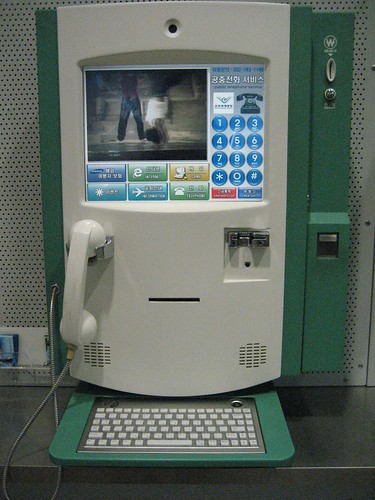
Of course all this is dependent on a few things. Facetime, Skype, gtalk, AOL, Facebook etc etc all need to agree on a common set of protocols and connection methods. We need a "DNS" for video calls. Email systems work this way, as to plain telephone networks. It doesn't matter who makes my home phone or who I have service with, I can call anyone else with a landline. We don't both need Bell South, we both don't need a panasonic phone land line calling just works. Common set of protocols and a common directory will have to happen for the idea to get traction. Service providers or Hardware manufactures can then work on providing enhanced services if you both have have an Apple phone for instance.
The other issue is just the social issue of having to look at someone. There's an awkward gaze and it seems wrong to multitask while having a conversation. However, I think social barriers will break down. Apple has helped this a lot by including facetime on the ipod touch. A generation will grow up talking to their friends while looking them in the eye. Once this happens the stigma of needing to be physically present will fade way, and going somewhere will become more rare, work will change, relationships will change and the world will change.
Sunday, October 17, 2010
Pony express now delivers letters every day.
One of the most common criticisms I hear of online interactions is they aren't real. I'm not sure what "real" means except to say that i expect to most people it means face to face. While face to face communications are still important and will alway be, they aren't required any longer to maintain relationships.
I've seen several articles like this one that state teen driving is down. I think this is a real fundamental switch in the way people interact. When I turned 16 I got my drivers license that same day. I drove to town so I could meet others and go where I wanted, all to "maintain" relationships. But that was before myspace, facebook, twitter, AIM, xbox live and most importantly SMS.
Now relationships are created, developed and cultivated over the air, on our mobile phones, computers, and consoles. Take for example that some 20% of marriages now were the result of meeting online. Even if the relationship isn't formed online, once you form a real relationship you can do a good job of maintaining that via online services and text messaging.
Finally, I think that is a real reason that the older generation just doesn't get "social networking" and wonder why would someone text hundreds of messages a day . At one time the barrier to getting a "typed" or printed document to someone was very high. There was a high cost to typing or writing a document and then mailing or somehow getting the document to recipient wasn't trivial so what you wrote down NEEDED TO BE WORTHY OF THE COST. Thus the follow through that these people think online updates are full of mindless dribble about what someone had a for lunch. The same people wouldn't hesitate to tell someone face to face what they had for lunch but by typing it somehow transforms that to meaningless information. However, that's not how the current generation sees it, they see it as maintaining a REAL relationship.
Subscribe to:
Posts (Atom)