In mid October I found out I was accepted to the Founder Institute. While honored to be accepted after taking the test and completed the application, I figured Houston was just too far to commute for 14+ weeks. After thinking about it further and realizing that my friends where tired of hearing the ten thousand start up ideas I had I decided to see if I had what it took to create and manage my dream company. I told my employer about my intentions to make the weekly commute to Houston and to my surprise they were so supportive of what I was doing they offered to become early "investors" by paying for me to fly down each week. I can't say enough times the group of guys I work with you'd never find anywhere else.
Enough with how I arrived and more about the program itself. Entrance into the program is based on an application and a couple of tests that test your ability to learn, and adapt. The institute is a top notch program, I did my research. Adeo, the founder has created over 2 Billion and value in companies he has either started or been involved in. The CEO mentor list reads like a who's who in Silicon Valley, mentors from household names like Mint, Evernote, QIK, techcruch, Evernote, Blippy, eyefi, etc. The program is structured for those of us who still have "day jobs" as all the classes are at night. This is different than other startup incubator programs like techstars or Y combinator. Also different from those other programs you don't have to have a co-founder (which I do not) or have a set idea, yet Founder Institute is the largest startup incubator with classes all over the world.
The first class reminded me of the first day of western civ in at a university I attended. It was the make or break class. Adeo, made you question your resolve to see if you were really going to finish what you start. He was clear about the effort required and that many people don't make it. BUT if you do make it to graduation you'll have an awesome company. I was also astounded how he was focused on your idea (if you had one) and was all business but took a genuine interest in you and your idea. He's a pretty amazing person in my dealings thus far. The first night we were divided into groups and given a pretty lengthy assignment to separate those who where there to check it out and those who were ready to get to work.
I was also lucky enough to schedule some "office hours" with him the next morning. This was one of four 30 min sessions he offered to help you to refine your idea. I had about four and he was quick to help me narrow it down. Again, he showed he really wanted me to succeed.
Our small group has proven to be made of some pretty spectacular people. They are all very smart with great ideas but the thing I like most is their willingness to help you with your idea. Our group in the 3 meetings we have had thus far has proven to be awesome with lots of sharing of ideas and improvements to others ideas. I can't wait to see what these guys build.
The first "real" class was on vision and values and our speakers where Matt Mandell who founded DC snacks and City Centric, Phil Libin of evernote and of course Adeo. All the talks were good enough I went back and re-watched some of them on the FI site. The next assignment is proving to be quite a chore but one I'm looking forward to getting it done. There's no doubt I'm going to learn something through this process. Who knows if I'll be successful but I'll have tried and learned and that's worth the price of this effort regardless.
Friday, November 19, 2010
The Beginning


Friday, November 5, 2010
To the highest bidder

One of the problems with all the app stores is "app discovery" it's searchable but if it's a common keyword maybe you don't find exactly what you are looking for. I can't imagine it's much longer before apple and google begin to sell "adwords" for apps. My guess is that it would work exactly like adwords works today on the google search site. Based on rankings, downloads, and price you are willing to pay some of the results will be sponsored ads. It's pretty easy money for both Apple/Google and really helps those in the marketplace who have a great product "buy" their way to critical mass.
We are retuning to "walled gardens" and closed systems, Google was smart to get into the moblie space in a big way, if they are going to maintain growth it will need to be through mobile and that will mean more than just ads on search.
Friday, October 29, 2010
HI MOM! Look I'm on TV
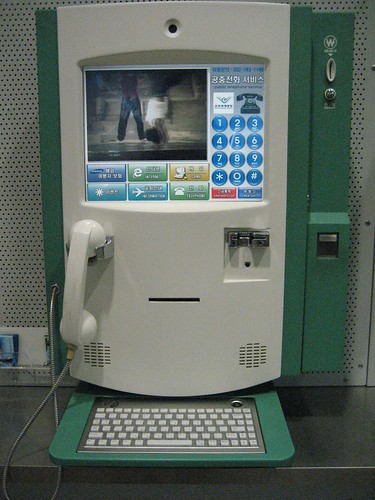
Of course all this is dependent on a few things. Facetime, Skype, gtalk, AOL, Facebook etc etc all need to agree on a common set of protocols and connection methods. We need a "DNS" for video calls. Email systems work this way, as to plain telephone networks. It doesn't matter who makes my home phone or who I have service with, I can call anyone else with a landline. We don't both need Bell South, we both don't need a panasonic phone land line calling just works. Common set of protocols and a common directory will have to happen for the idea to get traction. Service providers or Hardware manufactures can then work on providing enhanced services if you both have have an Apple phone for instance.
The other issue is just the social issue of having to look at someone. There's an awkward gaze and it seems wrong to multitask while having a conversation. However, I think social barriers will break down. Apple has helped this a lot by including facetime on the ipod touch. A generation will grow up talking to their friends while looking them in the eye. Once this happens the stigma of needing to be physically present will fade way, and going somewhere will become more rare, work will change, relationships will change and the world will change.
Sunday, October 17, 2010
Pony express now delivers letters every day.
One of the most common criticisms I hear of online interactions is they aren't real. I'm not sure what "real" means except to say that i expect to most people it means face to face. While face to face communications are still important and will alway be, they aren't required any longer to maintain relationships.
I've seen several articles like this one that state teen driving is down. I think this is a real fundamental switch in the way people interact. When I turned 16 I got my drivers license that same day. I drove to town so I could meet others and go where I wanted, all to "maintain" relationships. But that was before myspace, facebook, twitter, AIM, xbox live and most importantly SMS.
Now relationships are created, developed and cultivated over the air, on our mobile phones, computers, and consoles. Take for example that some 20% of marriages now were the result of meeting online. Even if the relationship isn't formed online, once you form a real relationship you can do a good job of maintaining that via online services and text messaging.
Finally, I think that is a real reason that the older generation just doesn't get "social networking" and wonder why would someone text hundreds of messages a day . At one time the barrier to getting a "typed" or printed document to someone was very high. There was a high cost to typing or writing a document and then mailing or somehow getting the document to recipient wasn't trivial so what you wrote down NEEDED TO BE WORTHY OF THE COST. Thus the follow through that these people think online updates are full of mindless dribble about what someone had a for lunch. The same people wouldn't hesitate to tell someone face to face what they had for lunch but by typing it somehow transforms that to meaningless information. However, that's not how the current generation sees it, they see it as maintaining a REAL relationship.
Wednesday, October 13, 2010
End of the line

This can be done in two ways. The first is that mobile allows people to be more productive while waiting around. Now because people have smart phones they can check email. Update their status, text or talk to others etc. But more importantly mobile tech will evolve the "check in" into actually reserving a place in line. There's really no reason this can't happen today.
Imagine that you go to get your haircut rather than just sit there you check into your shop before you arrive you see how long before someone can meet with you, you ask to get a text within 10 min of when it's time to get your haircut. Now you can be busy doing other things. What about the store? You see how long lines are before you arrive, you get notified when it's your turn to checkout. Getting your oil changed or other car repair, The dr.'s office, etc .
Mobile tech should be the "end of the line", this should improve everyone's life and create more efficiency in the market.
Tuesday, September 21, 2010
Return of the Portal
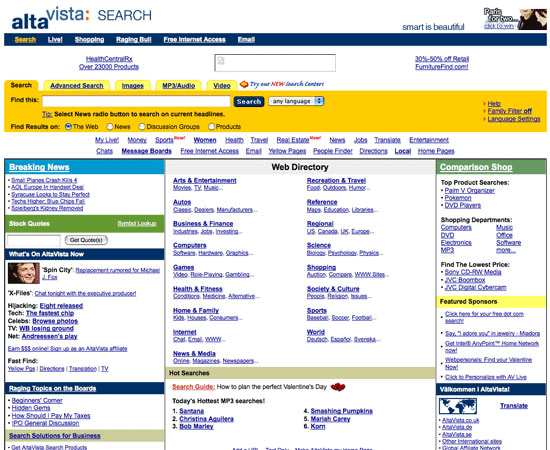
I believe this will evolve into content creators and media companies returning to the old idea of the web as the walled garden approach. Web 2.0 was all about API's and mash-ups the app model will make entrepreneurs return to the idea of the early 2000's web of getting someone to your site and keeping them there. This time it will be to try to get you to install the app and never close it by providing a large breadth of content all with ads surrounding it.
Think of this as being the equivalent of today's newspaper and magazine only with metrics of who is interacting with the ad. Again this is the same as the click through idea of the old display ads. Now I'm sure (or not) that markers of learned a little from the old days and will try and provide relevant ads based on location, and other things fed into the app through facebook and the like. Overall I think this is a step backward but we all have "app fever" and brands, startups and old media companies know it and will capitalize on it.
Sunday, September 5, 2010
Not looking far enough down the road on data centers
I remember 2 or 3 years ago thinking that we would be moving toward "the cloud" and that would require more space for companies who provided web services will need space for their services. This would necessitate building of larger data centers where people could house their severs. The way I saw this as an opportunity for someone who wanted to build out this infrastructure
Well fast forward to today and while we have moved toward the cloud in email and sales software, etc. I didn't consider consolidation within the cloud. There's an undeniable move toward efficiency I guess I missed the idea that would end up with all the service providers using a few cloud companies. They will build their own data centers not lease a rack in a third party place. Look at companies like amazon, salesforce, google, rackspace are all building out custom data centers. Web startups are just using these mammoth Internet companies and i don't see that changing. There may be a niche still for some companies to lease some server space in the end we'll all be just buying cycles of someone else's cloud.
Apple's new cloud
Subscribe to:
Posts (Atom)